

If you’ve noticed a persistent musty smell in your home-a damp, earthy odor that seems to cling to your clothes or linger even after running the fans-it's more than just stale air. It is often a powerful indicator of deeper issues with your indoor air quality (IAQ) and, potentially, signs of mold or mildew growth within your HVAC system. Many homeowners assume that a simple filter change or quick repair will resolve the problem, but if the odor returns quickly, it suggests that the root cause lies in inadequate moisture management or an aging, compromised system. My experience over two decades has taught me one fundamental truth: the health and efficiency of your climate control system start with proper air handling-not just temperature regulation. Understanding when a full HVAC system replacement is needed requires looking past the immediate smell and assessing the entire performance profile of your home’s breathing mechanism.
Why Does My Home Smell Musty? The Link Between Odor and Indoor Air Quality
The musty scent you detect isn't random; it’s the signature aroma of biological growth flourishing in an ideal environment: trapped moisture, consistent temperature fluctuation, and organic material (like dust or decaying materials) for nutrients. Addressing this requires a scientific understanding of where those odors originate.
First, we need to differentiate between the types of poor air quality. Sometimes, the smell is simply stale-the scent of air that hasn't circulated properly. This usually indicates insufficient airflow and poor duct sealing. However, when the odor is distinctly musty or damp-earthy, we are almost certainly dealing with mold or mildew growth.
The core problem is moisture accumulation combined with poor ventilation. When your HVAC system operates, especially if it’s older and less efficient, the condensate drain lines can get clogged or stagnant. Condensation-the natural byproduct of cooling-needs to flow out easily. If that water pools anywhere, it can create a breeding ground for mold spores and mildew, making it crucial to understand how proper HVAC maintenance helps keep your indoor air clean. Furthermore, dirty filters, neglected evaporator coils, and ductwork that hasn't been properly inspected become physical habitats for these organisms.
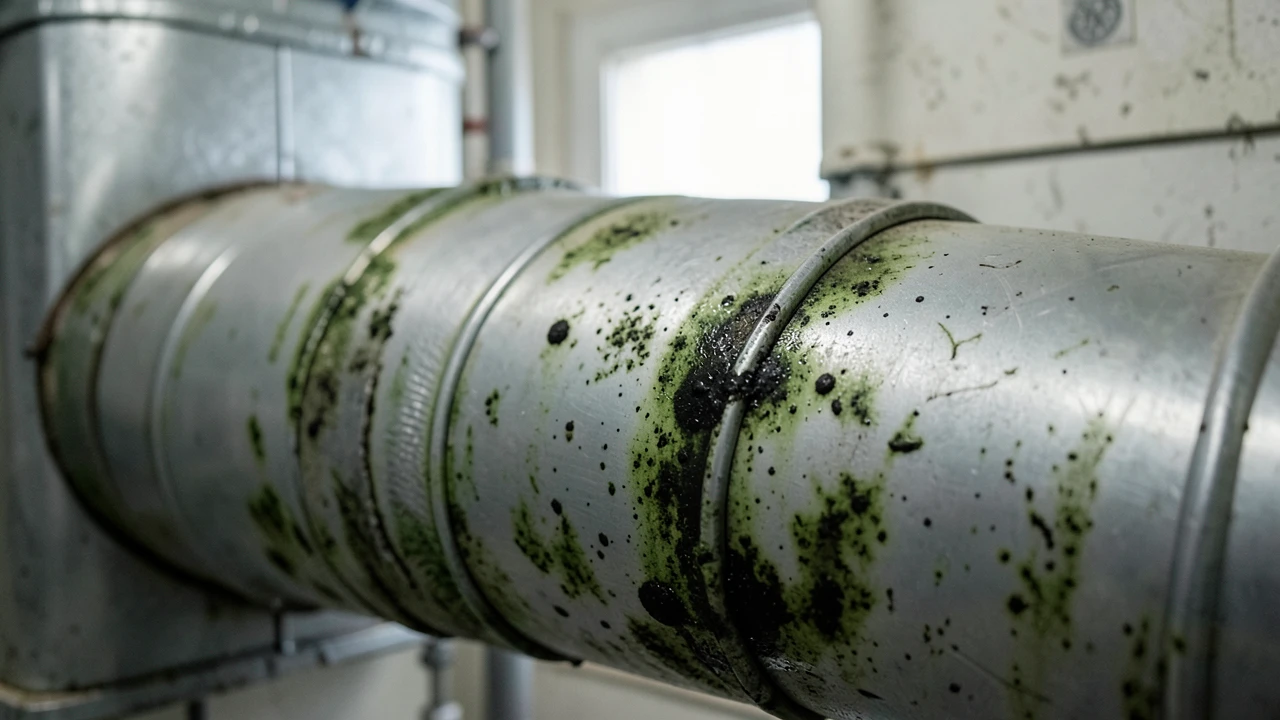
I often share this with new clients: "Most people think the smell comes from the air, when in reality, it comes from what is traveling through the air." The mold isn't floating free; it’s growing on surfaces within the ductwork and system components that are constantly exposed to moisture. This makes proper HVAC odor removal services critical. Chronic exposure to these mold spores or damp, stale air can have real health implications, triggering everything from seasonal allergies and respiratory issues to general discomfort for family members-especially children and elderly residents.
Understanding HVAC Failure: When a Simple Repair Isn't Enough
It is very common for homeowners to call an HVAC service when they smell mustiness, expecting that the technician will simply "fix the smell." While we are excellent at addressing immediate repairs, I need to guide you toward understanding that frequent 'band-aid' fixes often mask underlying structural or efficiency issues. Calling a repair service when the entire system is struggling isn’t solving the problem; it's just buying time until the next failure. It is very common for homeowners to call an HVAC service when they smell mustiness, often needing expert guidance on proper hvac services rather than just a quick fix.
Think of your HVAC unit like a car. If the engine starts running rough, a mechanic might replace one belt or tighten a hose today. That fixes this issue. But if the car has been ignored for ten years-if the battery is failing, the transmission fluid is sludge-filled, and the radiator fins are clogged with rust-replacing just one belt will only yield temporary results. The fundamental mechanical integrity of the system is compromised.
This brings us to system aging and degradation. In established neighborhoods across Carson City, many homes have HVAC units that are 15 years or older. Over two decades, components wear out predictably: furnace coils lose heat transfer efficiency; compressor seals degrade; and the metal ductwork itself can suffer from corrosion or structural damage. An old unit doesn't just run less efficiently-it starts performing poorly in its most critical functions, like managing humidity levels and maintaining consistent airflow, which are paramount to preventing musty smells indoors.
So, I ask myself this when speaking with clients: When was the last time your system struggled during a severe cold snap or an unexpected heat wave? If you find yourself asking these questions, it’s likely that simple repairs are no longer enough. The unit may be physically functional, but its operational capacity and efficiency have dropped to a point where systemic replacement is the responsible choice.
The Replacement Roadmap: Efficiency and Air Quality in One Investment
If your system has reached that age or performance threshold, viewing full HVAC replacement as an expense is thinking about it wrong. I encourage you to view it instead as a Long-Term Investment in both health and efficiency. This shift in perspective-from cost center to investment vehicle-is crucial for making the best decision for your family’s budget.
When we talk about modern replacements, whether it's installing high SEER central AC or zoned mini-splits, I always translate complex terms into simple benefits. For instance, a higher SEER rating might sound like jargon, but what it actually means to you is less money spent at the end of the month on your utility bill. We are talking about realizing tangible financial savings over the next decade.
The key difference between replacing just the indoor unit and doing a full replacement roadmap is the inclusion of integrated IAQ solutions. Simply swapping out an old furnace for a new one without addressing the ductwork, sealing leaks, or upgrading filtration will only lead to repeat problems-and wasted money. A true replacement should include:
- Ductwork Inspection and Sealing: Leaky ducts are major energy wasters that also compromise proper airflow balance. We seal them first.
- System Upgrade: Installing the most efficient unit for your climate zone (Carson City's varied seasons require robust systems).
- Dedicated IAQ System: This could mean advanced filtration or UV treatment specifically designed to eliminate mold and bacteria proactively, thus solving the source of musty smells long-term.
We always preemptively address cost concerns by being transparent: We won't push upgrades you don't need. Our goal is to provide clear options-from a specialized air handling service if the ducts are fine, to a full system replacement if both the unit and the ductwork are compromised.
Beyond Temperature Control: How Proper Air Handling Benefits Your Whole Home
Many homeowners think HVAC is just about making it hot or cold enough. While temperature control remains essential, I specialize in reminding people that optimal air handling is what truly dictates comfort, efficiency, and health within a modern home. This concept of proper airflow management benefits your entire living space far beyond simple thermal regulation.
Chief among these whole-home benefits is humidity control. Given the seasonal shifts and arid nature of parts of NV, managing indoor humidity levels is non-negotiable for IAQ. Too dry, and your skin and respiratory passages suffer; too humid, and mold spores thrive. A modern, properly functioning system precisely regulates this moisture balance.
Another vital component we focus on is duct sealing. If you have leaks in your ductwork-perhaps where the ducts pass through an attic or crawlspace-you are essentially paying to heat or cool the outdoors. This massive energy drain contributes significantly to both high utility bills and poor airflow, meaning the air that does reach your living room might be uneven or compromised by outdoor contaminants.
Furthermore, modern systems offer Zoned Climate Control. Instead of conditioning the entire house uniformly (which is inefficient), zoned control allows you to maintain ideal conditions in specific areas-like a master bedroom or a home office-without overcooling or overheating the rest of the structure. This level of precision not only saves money but provides unmatched comfort, ensuring every part of your family's environment is optimized for rest and activity.
Ultimately, achieving optimal air handling is the single action that eliminates musty odors, improves energy efficiency, and ensures year-round family health in Carson City. It’s a holistic process.
Taking the Next Steps Toward Cleaner Air in Carson City
If the persistent musty smell has become a chronic issue-if it seems to follow you from room to room regardless of how much fresh air you bring in-it is time for a professional assessment that goes far beyond a simple filter change. Don't just treat the symptom; find and fix the source.
Whether you live near Heavenly Valley, Cedar Flat, or anywhere else in our beautiful region, we understand that your home is your sanctuary. Our approach starts with diagnostics, not sales pitches. We offer a comprehensive air quality assessment and system performance review first. This low-friction step allows us to pinpoint exactly where the moisture buildup is occurring-is it the ducts? Is it the condensate drain? Or is it the unit itself?
Our technicians are vetted local experts who treat your property like it's our own: punctual, clean, and respectful of your time in Carson City. We promise no surprises on the bill; we provide clear options and let you decide what makes the most sense for your family’s budget, whether that is a specialized air handling service or full system replacement.
If you are concerned about musty smells indoor air quality HVAC system replacement, please don't wait until the smell forces your hand. Call us today at +1 775-490-8107 to schedule a consultation. Let us help you determine if advanced air treatment and efficiency upgrades are needed to restore clean, comfortable, and healthy air to your home.